
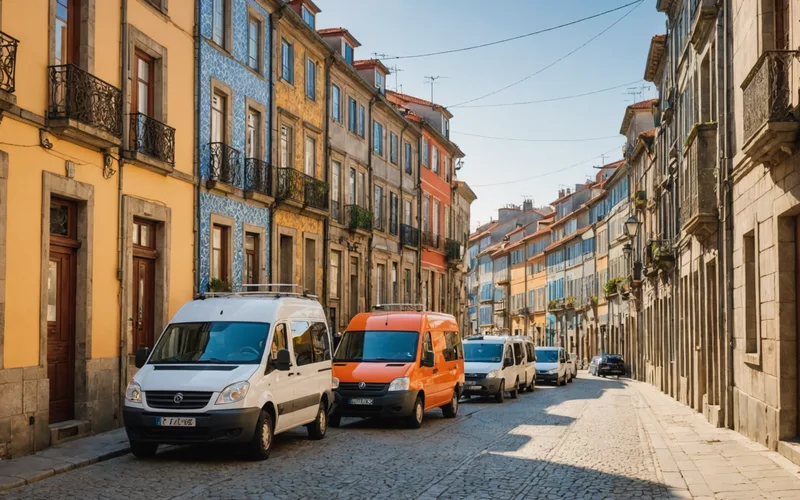
Porto is not a small market for home services. The metropolitan area has approximately 1.7 million residents across the municipalities of Porto, Matosinhos, Maia, Gondomar, Gaia, Espinho, Valongo, and Póvoa de Varzim. The housing stock is a particular driver of demand: a significant proportion of the buildings in the city's older neighborhoods — Bonfim, Miragaia, Cedofeita, Paranhos — date from the early to mid-twentieth century. They need maintenance constantly. Pipes age. Electrical panels don't meet modern safety standards. Azulejo tile crumbles away from damp walls after Atlantic winters push moisture into facades.
The service professionals are here too. Plumbers, electricians, locksmiths, cleaning professionals — the supply exists. Porto has no shortage of skilled tradespeople. The problem is not supply or demand. The problem is that the mechanism connecting the two is broken in ways that are systematic and fixable.
We mapped the journey
In early 2025, we spent eight weeks doing structured journey mapping with homeowners and professionals across the Porto metro area. We wanted to understand the specific friction points, not just the general complaint that "it's hard to find a good plumber." The general complaint is easy to state and impossible to act on. We needed the specific failure moments.
We observed seven friction points that appeared consistently across the homeowner journeys we mapped, regardless of neighborhood or service category.
Friction 1: Discovery without qualification. A homeowner who needs a plumber in Ramalde typically starts with a Google search, a Facebook group post, or a recommendation from a neighbor. The search returns a list of businesses and individuals with varying levels of information. Most have no pricing information. Many have outdated phone numbers. There is no fast way to determine whether a given professional is licensed, available, or in the right area.
Friction 2: The callback loop. Once a homeowner identifies a potential professional and calls them, the most common outcome is a voicemail or an unanswered call. Professionals are on-site during the day and often cannot take calls. They call back when they're available, which may be 4-8 hours later. The homeowner may have moved on to calling a second or third professional by then, creating a coordination mess where multiple professionals are returning calls about the same job.
Friction 3: Price vagueness on first contact. When a professional does connect, the first conversation is almost never a price commitment. It is an exploratory discussion followed by "I'd have to come and have a look." The look typically costs nothing, but scheduling the look adds another 1-2 days. The homeowner cannot compare prices without an on-site assessment from each candidate.
Friction 4: Scheduling uncertainty. If a professional agrees to do the job, the scheduling conversation is usually vague. "Thursday, sometime in the afternoon." That means the homeowner takes the afternoon off work, or arranges for someone to be home, and waits — with no visibility into whether the professional will arrive at 14:00 or 18:00, or at all.
Friction 5: No-show without notification. When the professional does not appear and does not call, the homeowner has lost half a day and must restart the entire process. This was the most emotionally salient friction point in our interviews. People were not just frustrated — they were angry, and that anger made them reluctant to try the discovery process again. The backlog of deferred maintenance builds up.
Friction 6: Post-job price revision. A professional who quoted "roughly €80-100" on first contact may revise upward on site once they see the job. The homeowner, who has already rearranged their schedule and has water leaking, is not in a strong negotiating position. Paying the revised price feels coercive; refusing it means the job doesn't get done.
Friction 7: No recourse after a poor job. When the work quality is poor, the homeowner has limited options. They can call the professional back and hope for resolution, leave a negative review if there's a review platform, or absorb the loss. For jobs below €200, pursuing a formal complaint through consumer protection channels is not practical in time or effort.
The structural root cause
These seven frictions share a common root: there is no coordination infrastructure between supply and demand. Professionals operate independently, managing their own schedules with a notebook or a memory, and homeowners navigate a fragmented discovery landscape with no reliable price or availability information.
This is not a problem unique to Porto. Home services markets across Portugal, and across Southern Europe more broadly, have the same characteristics. What makes Porto interesting for us specifically is the combination of factors: a large, aging housing stock with persistent maintenance needs, a dense urban geography that makes geographic clustering of jobs operationally meaningful, and a professional community that is technically skilled but operationally uncoordinated.
Porto's density is actually an asset here. The distance between Bonfim and Cedofeita is under 2km. A plumber who finishes a job in Paranhos at 11:30 can realistically reach Bonfim by 12:00 for the next booking. That clustering efficiency is not available in a dispersed rural market, and it is central to how OSCAR's scheduling model works.
The professional-side friction we don't discuss enough
Most of the friction analysis in home services focuses on the homeowner experience. The professional's experience is equally problematic, and the two sides of the market affect each other.
A plumber managing their own bookings spends a significant part of their day on logistics that don't generate income: returning calls, scheduling and rescheduling jobs, chasing payment, driving across the city between unrelated jobs. Our conversations with professionals suggested that solo tradespeople in Porto were spending 60-90 minutes per day on administrative and travel overhead above what organized scheduling would require. Over a working week, that is 5-7 hours of capacity that isn't generating revenue.
A professional who is time-poor and administratively overloaded is more likely to overschedule, more likely to no-show, and less likely to do a careful job on a late-afternoon booking after a chaotic day. The homeowner and professional friction points reinforce each other. Fixing one without the other doesn't work — which is why OSCAR has to operate as a genuine two-sided marketplace rather than just a consumer booking tool.
What we're not saying
We are not claiming that Porto's home services market is uniquely dysfunctional or that Portuguese tradespeople are particularly unreliable. The friction patterns we identified are structural, not cultural. They would appear in any market with the same characteristics: fragmented supply, no coordination infrastructure, and asymmetric information between buyers and sellers. Porto is where we started because it is where we are, and because the density makes the coordination opportunity particularly clear. We are not making a comparative judgment about the Portuguese market versus any other.
We also don't claim to have mapped the complete market. Our journey-mapping research covered the Porto municipality and parts of Matosinhos and Gaia. Espinho and the more dispersed northern municipalities likely have different dynamics, and we are honest that we have less data there. OSCAR's operational focus is currently Porto city and the western metro area. The eastern municipalities are coverage we're building toward, not coverage we're claiming today.