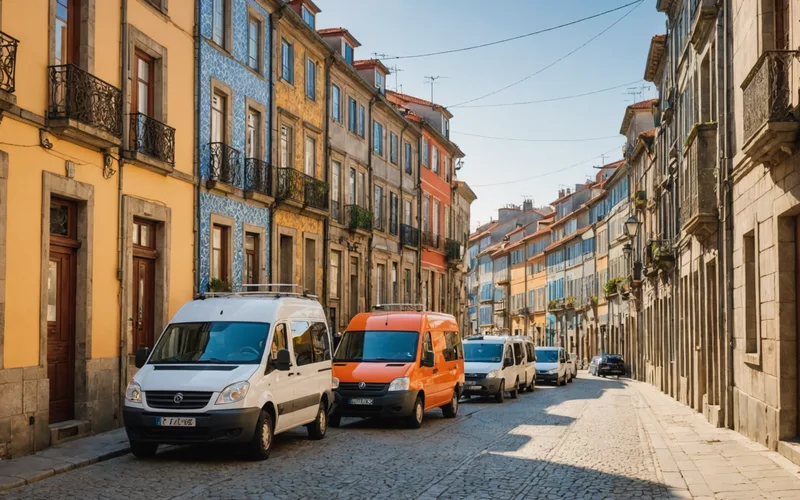


Porto's winter does not arrive dramatically. There is no hard freeze, no snow on the rooftops in Paranhos, no ice on the Ponte da Arrábida. What arrives instead is sustained Atlantic moisture — weeks of overcast skies, persistent rain, and humidity that sits at 80–90% for long stretches from November through February. This is the kind of weather that turns a hairline crack in a window seal into a soaked wall, a blocked gutter into a flooded terrace, and a poorly serviced boiler into a cold Friday night without hot water.
The five jobs below come from what our professionals consistently find when called to emergency bookings in January and February — situations that were entirely preventable if someone had looked at these systems in October or November. We are writing this in January, which means for most of you, the window has already closed for this season. Consider it a checklist for next October.
We should be clear upfront: not all of these are jobs you need a professional for. Some are inspections you can do yourself. We will say which is which.
1. Boiler Service
The gas boilers in most Porto apartments — particularly the Vulcano and Cointra units that are standard in buildings across Bonfim, Cedofeita, and Ramalde — are reliable when maintained and expensive to repair when neglected. The critical annual service involves cleaning the heat exchanger, checking the flue for blockages, testing the pressure relief valve, inspecting the burner, and verifying that carbon monoxide output is within safe limits.
This is not a job to do yourself. In Portugal, gas appliance service work must be carried out by a certified technician registered with DGEG (Direção-Geral de Energia e Geologia). An uncertified service does not count for warranty or insurance purposes. A proper annual service typically takes 60–90 minutes and costs between €60 and €110 depending on the boiler age and model.
The failure mode we see most often: a boiler that passed its last service three years ago and now has scale buildup on the heat exchanger. It still works — just inefficiently, using more gas and struggling to reach temperature on cold mornings. The scale is invisible without opening the unit, which is why it gets missed. A certified technician will catch it; a homeowner running hot water and concluding "it seems fine" will not.
Book this in October. By mid-November, certified gas technicians in Porto have lead times of two to three weeks. By December, you may not get an appointment before January.
2. Roof and Terrace Seal Inspection
Porto's older residential building stock, especially the four-to-six storey walk-up apartments common in Paranhos and Campanhã, has flat or near-flat terrace roofs that depend on a bituminous waterproofing membrane. These membranes last 10–15 years under normal conditions but degrade faster on west-facing surfaces that take the full force of Atlantic storms moving in off the ocean.
The inspection itself is something most homeowners can do: walk the terrace, look for visible cracking or lifting at the edges and around any penetrations (pipes, vents, antenna brackets), check where the membrane meets any raised walls or parapets. If you see white crystalline deposits (efflorescence) on the parapet walls, that is a sign moisture is already moving through.
If you find cracks or lifting, that is a job for a professional — specifically a specialist in impermeabilização (waterproofing). This is not in OSCAR's current service catalogue; it requires specialist materials and equipment. What we are saying is: find the problem now, while professionals are still available and while you can get it repaired before the heavy November rains. A terrace membrane repair done in October costs a fraction of what a waterlogged ceiling in a Paranhos apartment costs to repair in February.
3. Window and Door Seal Replacement
The rubber and silicone seals around windows and external doors compress and crack over time, particularly on windows facing west or northwest where wind-driven rain creates sustained pressure. A failed seal is not usually visible until you hold your hand near the window frame in a storm and feel cold air moving — or until you notice a damp patch on the wall below the window frame after the first heavy rain of the season.
Resealing a window is straightforward for a competent professional: remove the old silicone bead, clean the substrate, apply new silicone rated for external use (MS polymer or silicone with fungicide for Porto's humidity levels), and allow 24 hours to cure before exposure to rain. A typical apartment with six to eight windows takes a professional half a day to reseal fully.
Do this before mid-November. Silicone requires dry conditions to cure properly — applying it during active rain is a wasted effort. There is typically a reliable dry window in October that closes in November when the Atlantic lows start tracking further south.
4. Gutter and Downpipe Clearing
Buildings in Matosinhos and Foz do Douro that are close to vegetation — the pine trees along Avenida da Boavista, the gardens in Serralves, the older street trees along the Rua da Restauração corridor — have gutters that collect significant leaf debris over summer and autumn. A blocked gutter during a heavy rain event backs up water against the fascia board, saturates the soffit, and eventually works into the wall cavity.
Gutter clearing is something many homeowners can do themselves if they have access and are comfortable at height. For a standard residential building, a pressure wash from a scaffold board or stable ladder, clearing the downpipe entry points, and checking that downpipes discharge clear of the foundation is sufficient. If the building is more than three storeys or the gutters are not safely accessible, call a professional. Height work without proper equipment is not worth the saving.
If your building is managed through a condomínio (condominium association), this maintenance is technically the condomínio's responsibility for common areas. In practice, many condomínios in Porto defer this until problems appear. If you want it done before winter, it is worth raising at the next assembleia de condóminos or organising it at your own expense and claiming reimbursement.
5. Electrical Panel Inspection
This one is less obvious than the others, but it appears on our emergency callout list every winter. Porto's older residential buildings — particularly the 1960s and 1970s stock in Ramalde, Paranhos, and eastern Campanhã — often have original fuse boards that were not designed for the electrical loads of modern appliances. Christmas lights, electric heaters, washing machines, and dishwashers running simultaneously on an ageing consumer unit can cause nuisance tripping, and sometimes worse.
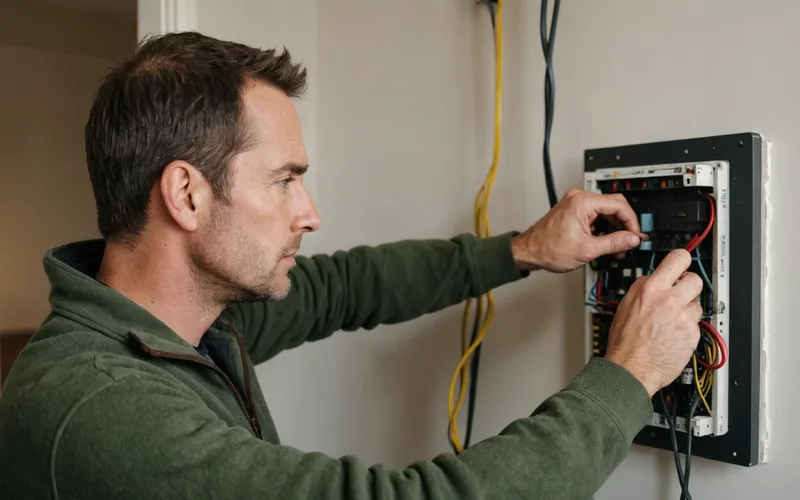
An electrical inspection should be done by an IMPIC-registered electrician. What they check: the condition of the main circuit breaker, whether the residual current device (RCD/RCCB) is functioning correctly, the load balance across circuits, and the condition of any visible wiring. They do not open walls — this is a visual and functional check, not a full rewire assessment.
If your building was constructed before 1975 and has not had an electrical assessment in the past five years, this is overdue. We are not saying it is definitely unsafe — most of the time it is fine. We are saying that an inspection costs €60–80 and takes two hours, and the alternative is finding out there is a problem when something trips under load on Christmas Eve.
Timing and What to Expect
The practical window for all five of these jobs in Porto is mid-October to mid-November. After that, lead times for gas technicians and electricians extend, window sealant cannot be applied reliably in rain, and any problems found cannot be rectified before the worst weather arrives.
For the jobs that fall within our service categories — boiler service (via our DGEG-certified gas professionals), window and door resealing, electrical inspection, and gutter clearing at accessible heights — you can book through OSCAR with a fixed price shown before you confirm. For roof and terrace waterproofing, we will refer you to specialists in that category; it is not something we currently offer.
Book early. The professionals who are good at these jobs fill up in October. By November, the ones still available are not always the ones you want.